
Gitelman syndrome (GS) is an inherited (autosomal recessive) salt-losing kidney disease characterised by:
The abnormality is in the tubules (in the medulla, inner area of the kidney). Gitelman syndrome is also referred to as familial hypokalemia-hypomagnesemia.
GS may present in childhood, but is more frequently diagnosed in adolescence or adulthood. Symptoms are widely variable both in nature and severity. The commonest are lethargy, transient weakness and/or tetany, paraesthesia, thirst and joint pains.
Blood pressure is usually lower than normal. Sudden cardiac arrest has been reported. Gitleman syndrome rarely causes chronic kidney disease (CKD).
Mutations in a gene called SLC12A3, which provides the code to make the NaCl cotransporter (in the distal convoluted tubule, DCT), are found in most GS patients. This is part of the tubule of the kidney as shown in the following diagram.
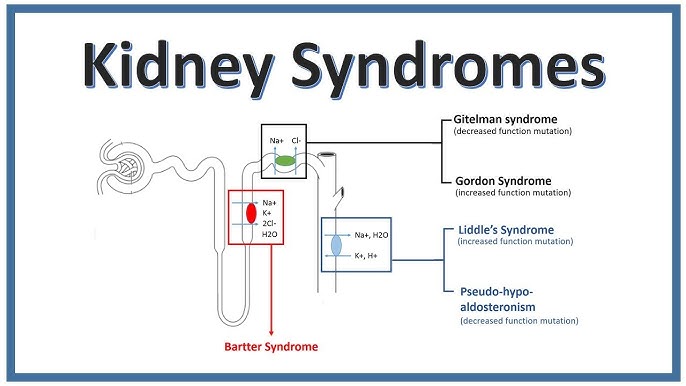
Gitelman syndrome is similar to two other diseases of the tubules of the kidneys, Barrter and Liddle Syndromes (also shown in the diagram above).
The genetics of GS are described here in more detail: Ravarotto, 2022.
The symptoms are discussed in more detail here: Graziani, 2010.
This is made by the combination of medical assessment by a kidney or endocrine (glands) specialist (nephrologist or endocrinologist) and the following characteristic blood tests for electrolytes (minerals), and blood pressure (BP).
The complexity of the diagnosis is discussed here: Urwin, 2019,
Replace electrolytes (lifelong)
Requirements for K and Mg are variable and should be individually tailored, and may be very high.
Doses usually require increase during infections, especially those involving vomiting and diarrhoea. In case of acute tetany, magnesium should be administered intravenously (IV) in hospital, together with K as necessary.
Medication (may be necessary in addition to electrolytes)
These can be useful to decrease electrolyte requirements (K, Mg etc). Doses are often limited by the fall in BP and/or other side effects.
Treatment guidelines are summarised here: Blanchard, 2017.
Other
GS patients should be encouraged to keep their own blood results, using Patients Knows Best, PKB; and increase K/Mg doses if unwell. Like people with diabetes, most can learn to self-manage as long as data are available to them. Daily activities may be symptom-limited and some occupations are unsuitable (e.g. active armed forces, pilot).
We have described an overview of Gitelman Syndrome. We hope it has been helpful.
There is a specialist clinic for patients with GS (and similar syndromes) in Cambridge. It would be a good idea to be seen there at least once.
Here is more information on Gitelman Syndrome.
This is a Gitelman Support Group in the UK.