This is how the AI article summary could look. Lorem ipsum dolor sit amet, consectetur adipiscing elit, sed do eiusmod tempor incididunt ut labore et dolore magna aliqua. Ut enim ad minim veniam, quis nostrud exercitation ullamco laboris nisi ut aliquip ex ea commodo consequat.
10 Bacteria Facts
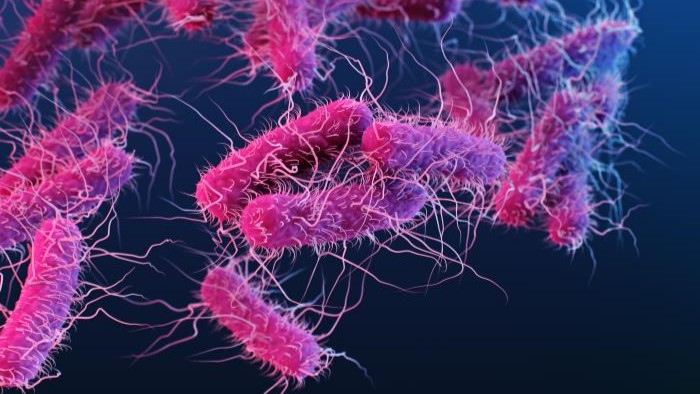 E Coli bacteria
Here are 10 key facts about bacteria.
- Definition: Bacteria are single-celled microorganisms that lack a nucleus and other membrane-bound organelles. Instead of a nucleus, they have a nuclear region called a nucleoid where their DNA is located.
- Types: There are two main types of bacteria: Gram-positive (e.g. Staphylococcus aureus) and Gram-negative (e.g. Escherichia coli), which are classified based on their cell wall structure.
- Shape: Bacteria come in various shapes, including spherical (cocci), rod-shaped (bacilli), and spiral-shaped (spirilla).
- Size: Bacteria are typically 0.5-5.0 μm in size, making them invisible to the naked eye.
- Habitat: Bacteria can be found in almost every environment, including the human body, soil, water, and air.
- Role in Human Health: Bacteria play a crucial role in human health, with some species being beneficial (e.g. gut flora) and others being pathogenic (e.g. causing infections).
- Antibiotic Resistance: The overuse and misuse of antibiotics have led to the emergence of antibiotic-resistant bacteria, making it challenging to treat infections.
- Common Bacterial Infections: Common bacterial infections in the UK include pneumonia, urinary tract infections (UTIs), and skin infections (e.g. cellulitis).
- Diagnosis: Bacterial infections can be diagnosed using various methods; including microscopy, culture, and molecular tests (e.g. PCR).
- Treatment: Treatment of bacterial infections typically involves antibiotics, but it’s essential to use them judiciously and follow guidelines – to minimise the risk of antibiotic resistance.